


Key Takeaways:
- What does “AI native” mean for law firms? It means using AI across both internal workflows and client-facing communication, not just behind the scenes.
- Most firms today are AI-assisted, using AI for research or drafting, but not applying it to client interactions.
- True AI-native law firms close the loop by using AI for intake, follow-ups, and ongoing client communication.
- Client-facing AI improves responsiveness, consistency, and overall client experience without adding staff.
- Becoming AI native doesn’t require a full overhaul; firms can start by integrating structured, task-based AI communication.
The term “AI native” is showing up everywhere in legal tech. It signals innovation, forward thinking, and alignment with the future of legal practice. But as more firms rush to adopt the label, its meaning has started to blur, and many are misusing it.
Here’s what AI native actually means: Your firm was built with AI as a core operating system, not bolted on as an afterthought. For law firms specifically, this means AI powers both your internal workflows and your client-facing communications. Clients experience the technology directly, not just through faster back-office work.
Most firms today are AI-assisted at best. They use AI for document review, legal research, or contract drafting. But if your clients never interact with your AI, you’re not AI native; you’re just efficient behind the scenes.
How Law Firms Typically Define AI Native Today
Most law firms interpret AI native as using AI tools within their internal workflows. That might include automating document review, using machine learning for legal research, or applying generative AI to draft contracts or litigation support materials.
These AI-native applications offer real value. They improve efficiency, reduce costs, and support staff. But they’re examples of internal AI, technology that improves operations without changing how the firm communicates with clients.
To create a real shift in how the firm is perceived and experienced, AI must participate in the interactions that actually win and retain clients.
Why Internal AI Alone Falls Short
A law firm is more than a set of services. It’s a relationship-based business. The moments that shape client experience — intake, updates, and document requests — don’t happen during drafting or billing. They happen in conversations.
If AI isn’t part of those conversations, calling the firm an “AI-native law firm” doesn’t reflect the client’s reality.
Clients don’t assess you based on your internal software. They remember how easy or frustrating it was to get answers, how quickly you responded, and whether they felt taken care of from first contact. That’s the gap most firms miss: They automate everything except the parts clients actually see.
The Missing External Client-Facing Loop
Many firms have already adopted internal AI. Very few have brought AI into external communication. This is the defining characteristic of true AI-native law firms.
This is where Trailmate changes the equation. The platform powers a client intake AI agent that engages new leads immediately, gathers case details, collects documentation, and guides clients through the next steps, at any hour of the day.
This isn’t a basic chatbot added to a web form. It’s an AI-native application built specifically for legal communication, capable of delivering structure and responsiveness from first contact through ongoing case updates.
What True AI-Native Law Firms Look Like
A truly AI-native law firm doesn’t just use AI behind the scenes. It applies AI to both internal and external functions.
This includes:
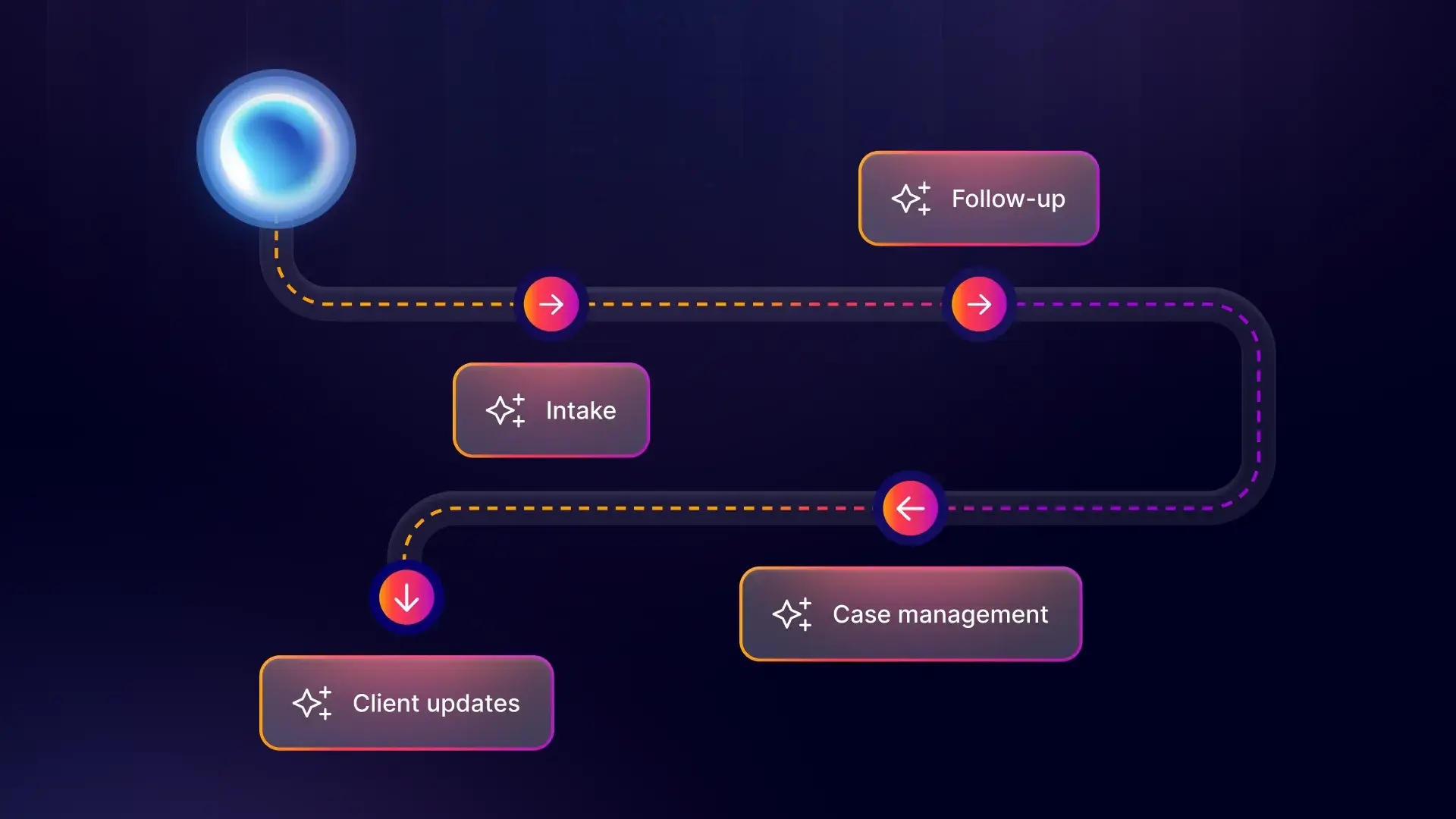
- Automating intake conversations and document collection.
- Using AI agents to handle follow-ups and reminders.
- Sending real-time status updates or evidence requests.
- Maintaining consistency in tone, accuracy, and task completion across all client touchpoints.
Firms that operate this way can scale their communication without hiring more staff. They also meet growing client expectations for responsiveness and clarity — expectations that voicemail and web forms simply can’t satisfy anymore.
Client Communication as the Defining Factor
Here’s the simplest test: Can your clients tell you use AI?
If the answer is no, you’re AI-assisted, not AI native. You’ve improved your back office, but you haven’t transformed the client experience.
When people engage with your firm, they don’t assess your internal software. They remember how easy or frustrating it was to get answers, upload documents, or follow instructions.
That’s why client-facing AI is the key difference between being AI-assisted and becoming truly AI native. AI that helps behind the scenes improves efficiency. AI that helps your clients creates impact.
Becoming AI Native Without Overhauling Everything
The good news: Firms don’t need to reinvent their entire business to become AI native.
By integrating a focused solution like Trailmate, you can deploy intelligent, client-facing automation that complements your existing processes. You decide what the AI should do, and it sticks to those tasks. Clients feel taken care of, and your team gains back time without giving up control.
This is how firms begin to operate like AI-native law firms in practice, not just in marketing.
Want to see how client-facing AI transforms the entire intake and communication process? Read our complete guide to automated client communication for law firms and learn how to lead with technology that clients actually experience.

