


Key Takeaways:
- AI adoption in small law firms is most effective when it starts with client-facing communication, not internal tools.
- Small firms benefit from faster response times, improved intake, and better lead capture without increasing staff.
- Modern AI platforms are affordable, easy to implement, and designed to fit existing workflows.
- Starting with intake and follow-ups delivers quick wins and immediate ROI for small practices.
- Expanding to full life cycle communication helps firms scale client engagement while reducing administrative workload.
If you’re running a small or mid-size law firm and feel like you’re behind on AI, you’re not alone. AI adoption for smaller law firms has been slower than in larger practices, not because the technology isn’t relevant, but because it’s hard to know where to start. Between competing priorities, tight budgets, and concerns about complexity, many firms have watched from the sidelines while the conversation around AI has accelerated.
But here’s the reality: Small plaintiff-side and consumer-facing firms are actually in the best position to benefit from AI, particularly when it comes to client communication. You don’t need a massive tech stack or a dedicated IT team to see real results. You just need to start in the right place.
Why Small Firms Are Ideal Early Adopters
Small law firms operate differently than large ones. You’re closer to your clients, more agile, and more dependent on converting every lead that comes through the door. That makes AI adoption in small law firms not just practical, but strategic.
Large firms can afford to lose a few leads to slow response times or after-hours inquiries. Small firms can’t. When a potential client fills out a form at 9 p.m. or calls on a Saturday, that’s often your only chance to make an impression. Client-facing AI ensures you’re always responsive, without stretching your team thinner or hiring additional staff.
Small firms also benefit from faster implementation. You’re not navigating layers of approval or integrating with decades-old legacy systems. You can deploy a focused solution, see results quickly, and adjust as needed.
Common Barriers to AI Adoption
Despite these advantages, many small firms hesitate. The most common concerns include cost, complexity, and control.
Cost is often overestimated. Using AI in law firms doesn’t require enterprise-level budgets. Purpose-built AI for legal intake and communication is priced for small practices and delivers immediate ROI by capturing leads that would otherwise be lost.
Complexity is also a misconception. Modern AI is designed to work within your existing workflows. You’re not replacing your case management system or retraining your staff. You’re adding a layer that handles repetitive client-facing tasks like intake, follow-ups, and document collection, so your team can focus on legal work.
Control is the biggest mental hurdle. Firms worry that AI will sound robotic, make mistakes, or operate without oversight. The truth is that you define what the AI does. It follows your intake process, uses your language, and escalates urgent matters to your team. It’s an assistant, not a replacement.
Start With Client-Facing AI (Not Internal Tools)
Most firms think about AI adoption for law firms backward. They look at internal tools first, like document review, legal research, or contract drafting, because those feel safer. But internal AI doesn’t change how clients experience your firm.
Small business AI agent advantages are most apparent when AI directly engages with clients. Start with client-facing AI because it delivers the fastest, most visible wins. When a lead contacts your firm and gets an immediate, intelligent response, even at midnight, that’s a tangible improvement they can feel. It also captures revenue that would otherwise walk away.
Client-facing AI handles intake conversations, collects case details, prompts document uploads, and routes urgent inquiries to your team. It works 24/7, never calls in sick, and never forgets a follow-up. This is where Trailmate makes the difference: it’s built specifically for legal client communication, not repurposed from retail or customer service software.
Quick Wins: Intake and Follow-Ups
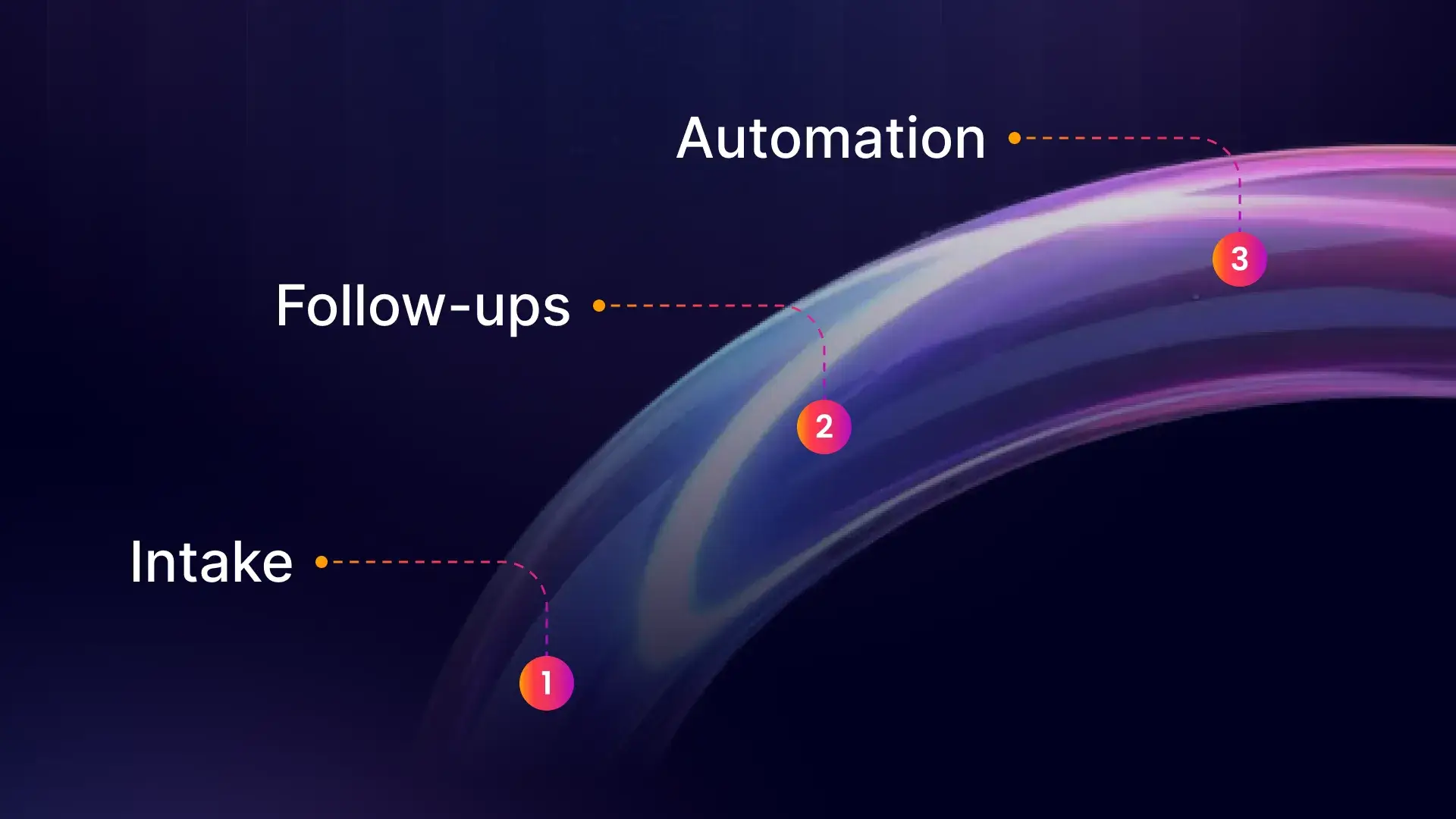
The easiest place to start is intake. Every firm has leads who reach out after hours, during lunch, or when your team is in court. These are moments when traditional reception falls apart. AI fills that gap instantly.
Set up your AI to greet new inquiries, ask qualifying questions, and collect the information you need to evaluate the case. It can also send follow-up messages to leads who haven’t responded, keeping them engaged without manual effort from your staff.
This is easy to implement because it doesn’t require major workflow changes. Your team still reviews every case. The AI just ensures no lead goes cold while you’re unavailable.
Scaling to Full Lifecycle Communication
Once intake is running smoothly, you can expand AI to handle ongoing client communication. This includes appointment reminders, status updates, document requests, and case milestone notifications.
By automating these touchpoints, your firm maintains consistent communication without burning out your staff. Clients feel informed and supported, and your team spends less time answering repetitive questions or chasing paperwork.
KPIs to Track Early AI Success
Measure what matters. Track response time to new leads, conversion rate from inquiry to retained client, and time saved on intake tasks. Also monitor client satisfaction through feedback or surveys. Clients who experience fast, clear communication are more likely to refer others.
These metrics prove ROI quickly and help you refine how the AI operates within your practice.
Ready to see how client-facing AI works in practice? Explore our complete guide to automated client communication for law firms and take the first step toward smarter, more scalable client engagement.

