


Key Takeaways:
- AI legal hallucinations occur when an AI system generates confident-sounding but incorrect information, which can create serious risks in legal communication.
- Client-facing AI for law firms must operate within task-bounded workflows and defined guardrails to prevent hallucinations and misinformation.
- “On-rails” AI design keeps conversations focused on specific objectives like intake, document collection, and case updates.
- Systems with escalation logic and validation controls help prevent AI legal hallucinations by routing complex questions to human staff.
- Safe AI platforms allow law firms to automate client communication while maintaining accuracy, trust, and professional responsibility.
For many law firms exploring automation, safety is the biggest sticking point. There’s curiosity about AI’s potential, but also a very real fear: What if the AI gets it wrong?
In legal communication, mistakes aren’t just inconvenient. They can jeopardize trust, impact outcomes, or raise compliance concerns. That’s why this question matters so much: Is client-facing AI safe for law firms? And more specifically, how do platforms like Trailmate handle AI legal hallucinations and ensure the technology stays grounded?
Let’s walk through how safe, reliable legal AI actually works, and how it differs from the unpredictable bots you’ve heard about.
What Are AI Hallucinations?
AI hallucinations happen when a language model generates information that sounds correct but isn’t. These aren’t bugs in the traditional sense. They’re confident-sounding errors produced when the AI tries to fill in gaps or answer questions beyond its actual knowledge or scope.
In everyday settings, a hallucinated restaurant name or fictional historical fact might be amusing. But in a law firm? It’s a problem.
That’s why AI hallucination prevention isn’t optional in legal tech. It’s a requirement for client safety, firm credibility, and professional responsibility.
Why Hallucinations Matter More in Legal Communication
Most legal clients aren’t experts in the law. They rely on your firm to provide accurate information, clear instructions, and trustworthy guidance. If an AI platform used during intake or follow-ups gives an answer that sounds legally binding, but isn’t, the consequences can be serious.
This is where legal-specific AI needs to separate itself from generic technology. A client-facing agent cannot guess, improvise, or drift off topic. It must stay aligned with what the firm intends, every step of the way.
Trailmate was built with this concern at the center. Legal AI hallucination prevention is not an afterthought. It’s baked into how the product is designed.
What ‘On-Rails’ AI Design Means
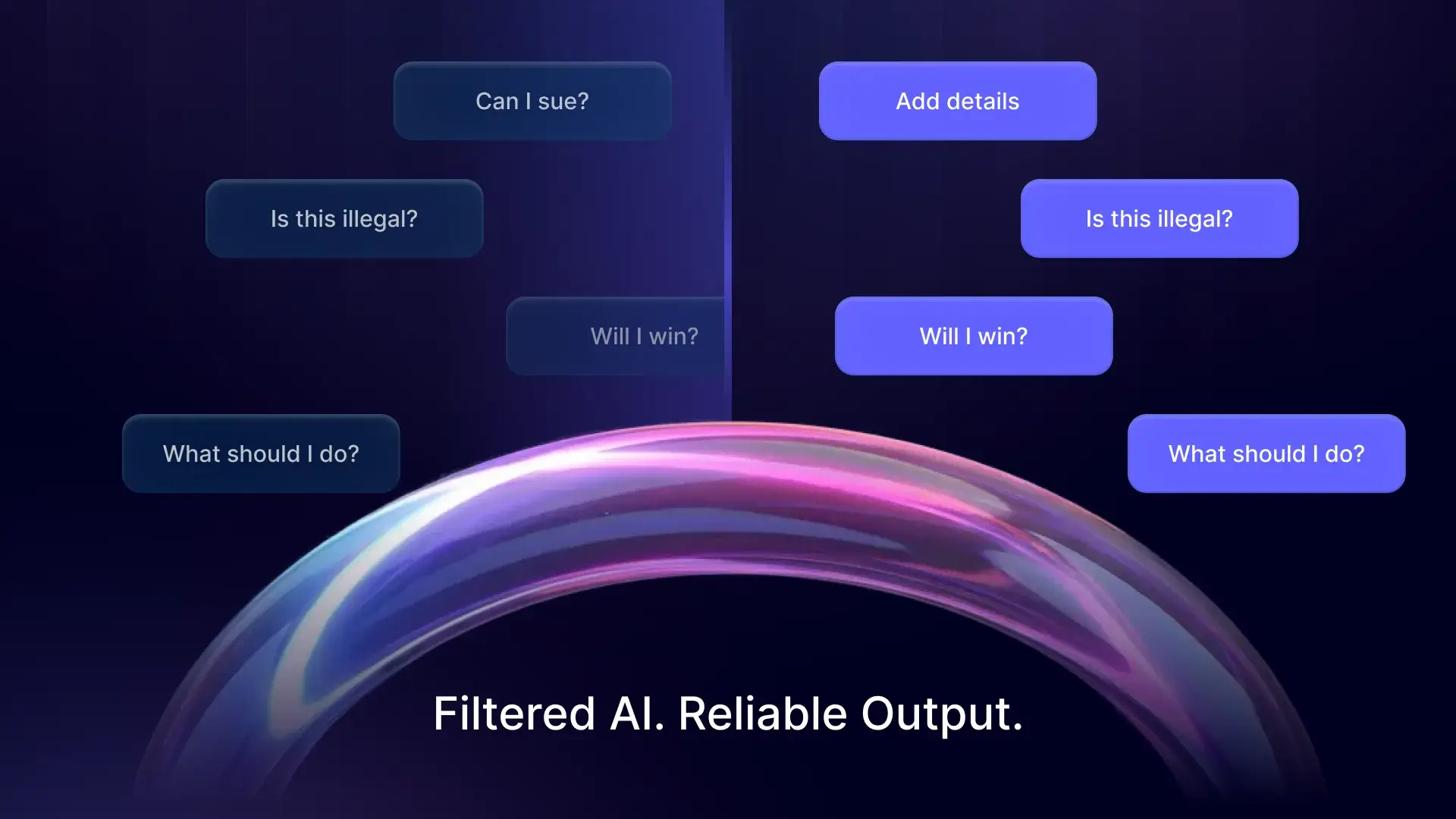
The term “on-rails” describes AI that operates within a defined, controlled path. Instead of trying to answer any possible question (like ChatGPT or open-ended bots), on-rails AI follows firm-set objectives and scripts that are intelligently adaptive, but not free-form.
This design keeps the AI focused. It can have real conversations, but only within boundaries you define. There’s no wandering into legal advice, no making up case law, and no guessing about procedures it shouldn’t address.
What AI solutions are safe for law firm use? Systems like Trailmate are smarter and safer because they’re task-specific and process-bound.
Task-Bounded Conversations Explained
Instead of asking an AI to “talk to the client,” Trailmate is instructed to complete a specific task: collect intake details, request a document, confirm a timeline, or send an update.
Each AI interaction is goal-oriented and context-aware. That’s what makes Trailmate a true assistant rather than a general-purpose responder.
By keeping conversations task-bounded, law firms eliminate the risks associated with free-form generation. The AI knows what it needs to do, and just as importantly, what it should not do.
How to Prevent AI Hallucinations: Escalation, Guardrails, and Accuracy Controls
Beyond structure, AI needs real-time safeguards. Trailmate includes built-in escalation logic, so if a client’s question falls outside the AI’s scope, it knows when to refer the conversation back to a human.
Other safety layers include:
- Preapproved phrasing for legal questions.
- Real-time data validation to catch input errors.
- Workflow triggers that alert staff to client flags or document issues.
How Safe AI Enables Confident Adoption
The hesitation around AI is understandable. But the solution isn’t to wait; it’s to use better technology. With the right design, law firms can embrace automation without compromising safety, clarity, or client trust.
By focusing on structured communication and proactive AI hallucination prevention, Trailmate gives small and mid-size firms a reliable way to modernize client communication.
Once you know the system won’t guess, won’t wander, and won’t mislead, the decision becomes much simpler. Using AI, you are able to expand on human judgment.
Ready to take the next step? Book a demo and see how safe, on-rails AI can help your firm engage clients faster while maintaining trust.

